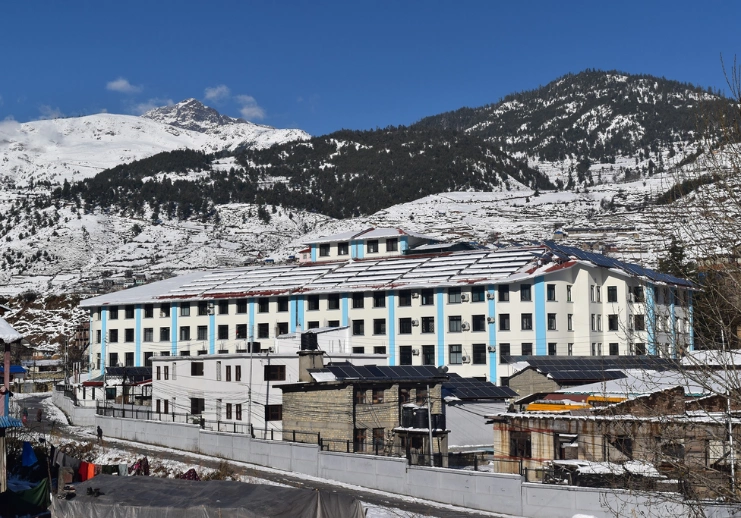
Karnali Academy of Health Sciences (KAHS) is one of Nepal’s most important government medical institutions, established on 20 October 2011 by an Act of Parliament. Located in Jumla, Karnali Province, the academy was created by upgrading the former Karnali Zonal Hospital with the aim of improving healthcare services, medical education, and research in some of Nepal’s most remote and underserved regions.
KAHS was founded to address the shortage of healthcare professionals and medical facilities in the Karnali region. The institution primarily serves districts such as Jumla, Humla, Kalikot, Dolpa, Mugu, Jajarkot, Bajura, Bajhang, and Achham, while also supporting other districts of Karnali Province. Its mission focuses on providing affordable healthcare, producing skilled medical professionals, conducting health research, and improving public health outcomes in rural and marginalized communities.
The academy operates the Karnali Academy Teaching Hospital in Jumla, a government teaching hospital with around 300 beds. The hospital provides outpatient, inpatient, emergency, surgical, laboratory, radiology, ultrasound, ECG, and other specialized healthcare services. The large patient inflow from remote Himalayan districts gives students valuable practical and community-based clinical exposure.
KAHS offers various health science programs including MBBS, Nursing, Midwifery, postgraduate medical education, and other healthcare-related courses. The institution emphasizes community-oriented medical education, practical clinical training, ethical healthcare practice, and research. Its MBBS curriculum is specifically designed to prepare doctors capable of serving rural and geographically challenging regions of Nepal.